
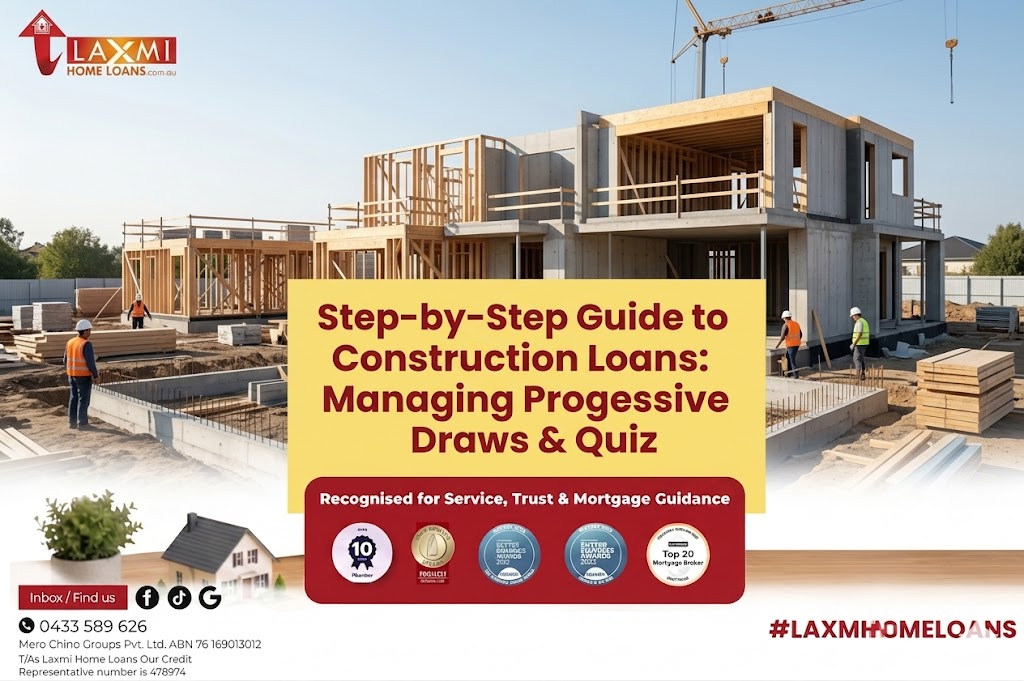
Step-by-Step Guide to Construction Loans: Managing Progressive Draws

Quick answer: A construction loan does not pay out as a single lump sum. Instead, the lender releases funds in stages, commonly called progressive draws or progress payments, as each part of the build is completed and verified. You only pay interest on the amount drawn so far, not the full loan, and each draw is released against the lender’s own inspection of the work, not simply the builder’s invoice.
A construction loan works differently to a standard home loan in one important way. The bank does not hand over the full amount on day one, because the asset securing the loan, your finished home, does not exist yet.
Instead, funds are released progressively as the build reaches agreed milestones. Understanding how that process works, and where it commonly goes wrong, can save you a genuinely stressful conversation with your builder partway through a build. For a broader introduction to construction finance, our Construction Loans service page is a good starting point.
What is a progressive drawdown?
A progressive drawdown is the portion of your construction loan released at each stage of the build, rather than the whole amount being paid out upfront. Your builder completes an agreed stage of work, submits an invoice or progress claim, and the lender releases the matching portion of the loan once it is satisfied the work has actually been done.
This structure protects everyone in the arrangement. The lender is not exposed to the full loan amount against a property that is still partly built, the borrower is not paying interest on money that has not been used yet, and the builder receives staged payments that match their own cash flow needs as materials and labour are committed.
The trade-off is that this staged process introduces more paperwork, more inspections, and more potential points of friction than a standard home loan settlement, which is exactly why understanding each stage in advance matters.
The 5 stages of a standard build contract
Most Australian building contracts follow a five-stage progress payment structure, broadly aligned with industry guidance from bodies like the HIA and Master Builders associations. The exact percentages can vary by builder and lender, so treat the figures below as a commonly used guide rather than a fixed rule.
| Stage | What it covers | Typical share of loan released |
|---|---|---|
| Slab | Site preparation, footings, and the concrete slab or base poured for the home to sit on | Roughly 10% to 15% |
| Frame | Timber or steel frame erected for walls, floors, and roof structure, along with rough-in plumbing and electrical | Roughly 20% |
| Lock-up (also called enclosed) | External walls, roof covering, windows, and doors installed, so the building is weather-tight and lockable | Roughly 20% |
| Fixing | Internal linings, cabinetry, tiling, and the completion of plumbing and electrical fit-off | Roughly 30% |
| Completion | Final detailing, painting, fencing, site clean-up, and handover once the final inspection is passed | Roughly 10% |
Figures are a general industry guide only. Some lenders and contracts use slightly different splits, and the Northern Territory in particular follows a different, more detailed staged structure with additional payment points. Always confirm the exact schedule in your specific building contract and loan documents.
Each stage typically requires its own form of sign-off before the lender releases funds, such as an engineer’s slab certificate, a frame inspection certificate, or a site inspection from the lender’s own valuer. This is the part of the process that catches many borrowers off guard, since the documentation requirement sits between the builder finishing the work and the money actually arriving.
Why valuations matter before construction starts
Before your construction loan is even approved, the lender needs to value a property that does not exist yet. Rather than a standard valuation based on comparable sales, lenders typically use what is sometimes called an as-if-complete or to-be-erected valuation, based on your land value plus the fixed-price building contract, plans, and specifications.
This initial valuation matters because it determines how much the lender is willing to lend against the finished home, and it is also a check against overcapitalising, spending more on the build than the finished property is likely to be worth in your local market.
Valuations also reappear throughout the build itself. Rather than simply paying whatever your builder invoices, most lenders send their own valuer or quantity surveyor to inspect each stage before releasing funds. If that inspection finds less progress than the builder has claimed, for example a roof that is sarked but not yet tiled, the lender releases funds based on its own assessment, not the builder’s invoice. This is a normal part of the process, but it can create a temporary funding gap if the borrower has not budgeted for the possibility.
Check Your Borrowing Power
Free calculator from Kishor Acharya — no credit check, no impact on your score.
How to avoid construction delays
Most construction loan delays come down to paperwork and timing mismatches between the builder, the lender, and the borrower, rather than the building work itself. Here are the most common ones worth watching for.
- 1 Stage names and percentages that don’t match the loan documentsIf your building contract uses different stage names or splits to your loan’s progress payment schedule, every drawdown request can trigger extra back and forth. Check both documents line up before you sign either one.
- 2 Missing inspection certificatesSlab, frame, and other stage certificates from an engineer or certifier are often required before the lender will even book its own inspection. A missing certificate can hold up a drawdown by days or weeks.
- 3 Undocumented variationsChanges to the design or finishes after the contract is signed need to be costed and documented as a formal variation. Verbal agreements with the builder are not enough, and undocumented variations are a common source of funding shortfalls.
- 4 Lapsed or missing insurance documentationLenders typically require a current certificate of currency for the builder’s home warranty and public liability insurance before releasing funds. If this lapses partway through a long build, it can stall the next drawdown.
- 5 Not budgeting for inspection turnaround timeLender inspections commonly take anywhere from a few business days to two weeks, longer during busy building periods. Builders working to a tight cash flow can run into friction if this gap is not planned for in advance.
- 6 Running past the loan’s construction periodMost construction loans require the build to finish within a set period, often 12 to 24 months. Significant delays can mean an extension request or a fresh application, so it pays to flag slow progress with your broker early rather than at the deadline.
Many of these issues are avoidable with a small amount of planning before the first sod is turned, which is also when it is worth comparing how different lenders structure their construction loans, since flexibility on inspection timing and documentation requirements varies more than people expect. If your loan includes an offset account, our guide to offset accounts versus redraw facilities explains how that can help reduce interest while funds are sitting undrawn during a build.
Common questions about construction loan progress draws
Do I pay interest on the full loan amount from day one?
Will the bank just pay whatever my builder invoices?
Can I make changes to the design partway through the build?
Does my construction loan automatically convert to a normal home loan when the build finishes?
If my build runs over time, does the bank just keep extending the loan?
Get your build structured correctly from the start
The right construction loan structure can save you weeks of back and forth between your builder and your lender. Book a free, no obligation chat with the Laxmi Home Loans team before you sign your building contract.
Book a free consultation or call 0433 589 626.
This article is general information only and does not take into account your personal financial situation, objectives, or needs. It is not financial, tax, or legal advice. Progress payment structures, inspection requirements, and construction loan terms vary between lenders and building contracts, so confirm the specific terms of your loan and contract with your broker, builder, and solicitor before making a decision.
Laxmi Home Loans is the trading name of Mero Chino Groups Pty Ltd, ABN 76 169 013 012, Credit Representative Number 476974, authorised under Australian Credit Licence Number 383640.