
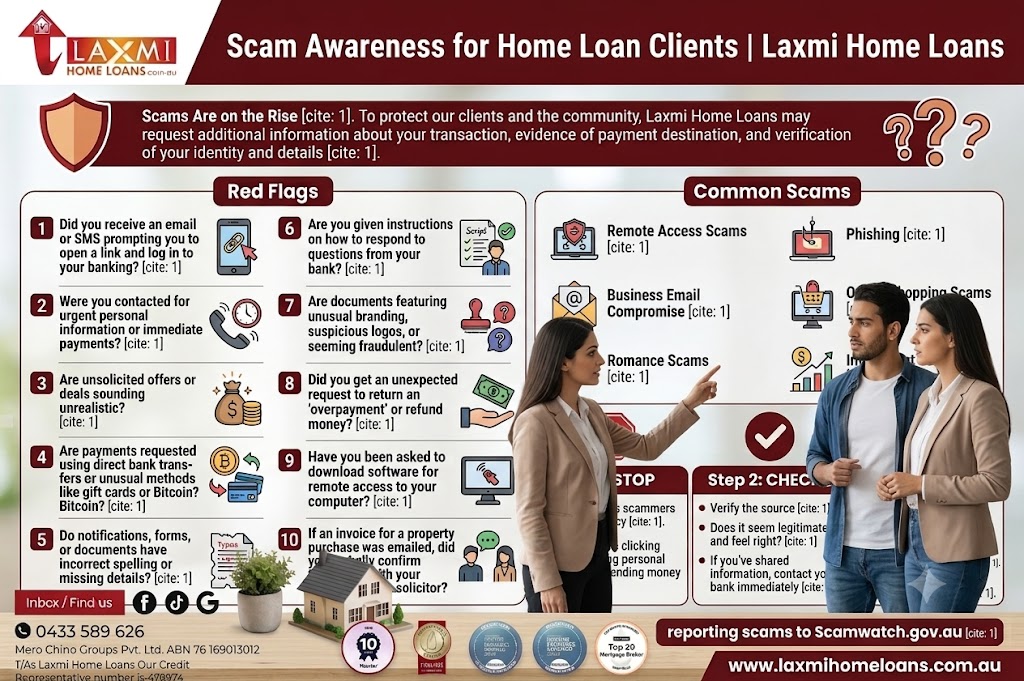
Laxmi Home Loans scam awareness full-width blog: protecting your finances by spotting scam red flags
Client protection
Protecting your finances:
spotting scam red flags
spotting scam red flags
Scams targeting home loan and property clients are on the rise. To protect our clients, Laxmi Home Loans may request additional information about your transaction, evidence of payment destination, and verification of your identity and details.
Red flags: can you spot them?
1
Banking link in text or email High risk
Did you receive an email or SMS prompting you to click a link and log in to your banking? Legitimate banks never send login links by SMS or email.
2
Urgent personal info or payment High risk
Were you contacted for urgent personal details or asked to make an immediate payment? Urgency is the scammer’s most common tool.
3
Too-good-to-be-true deals
Are unsolicited offers or deals sounding unrealistic? If the offer seems too generous without explanation, treat it as a warning sign.
4
Direct transfer or gift card requests High risk
Are payments requested via direct bank transfer, gift cards, or Bitcoin? No legitimate business or lender will ask you to pay this way.
5
Missing details or misspellings
Do notifications, forms, or documents contain errors, incorrect spelling, or missing details? Scammers often copy legitimate documents imperfectly.
6
Scripted bank question instructions
Are you being coached on how to answer your bank’s security questions? This is a clear sign you are being manipulated by a scammer.
7
Unusual branding or suspicious logos
Do documents feature unusual or inconsistent branding? Look closely at logos, email addresses, and letterhead for anything that looks off.
8
Unexpected refund or overpayment High risk
Did you receive an unexpected request to return an overpayment or refund? This is a well-known scam where the original payment is fraudulent.
9
Remote computer access request High risk
Have you been asked to download software allowing remote access to your device? Never allow this. It gives scammers full control of your banking.
10
Property invoice sent by email High risk
If a deposit or settlement invoice arrived by email, always call your conveyancer or solicitor directly to verify the account details before transferring.
Common scam types to know
Remote access scams
Phishing
Business email compromise
Online shopping scams
Romance scams
Investment scams
Stop. Check. Protect.
Step 1
Stop
Do not rush. Scammers deliberately create urgency to pressure you into acting without thinking.
Pause before clicking any links, sharing personal details, or transferring any money.
It is always acceptable to say you need time to verify before proceeding.
Step 2
Check
Verify the source independently using contact details you already have, not ones provided in the message.
Does the request seem legitimate and feel right to you?
If you have already transferred money or shared banking details, contact your bank immediately.
Step 3
Protect
Enable security alerts and two-factor authentication on all your banking accounts.
Keep your devices, passwords, and personal details secure at all times.
Use trusted tools and resources to safeguard your finances during your property purchase.
Help protect other Australians. Report scams to Scamwatch.gov.au so authorities can track and stop scammers targeting home buyers and property clients across Australia.