
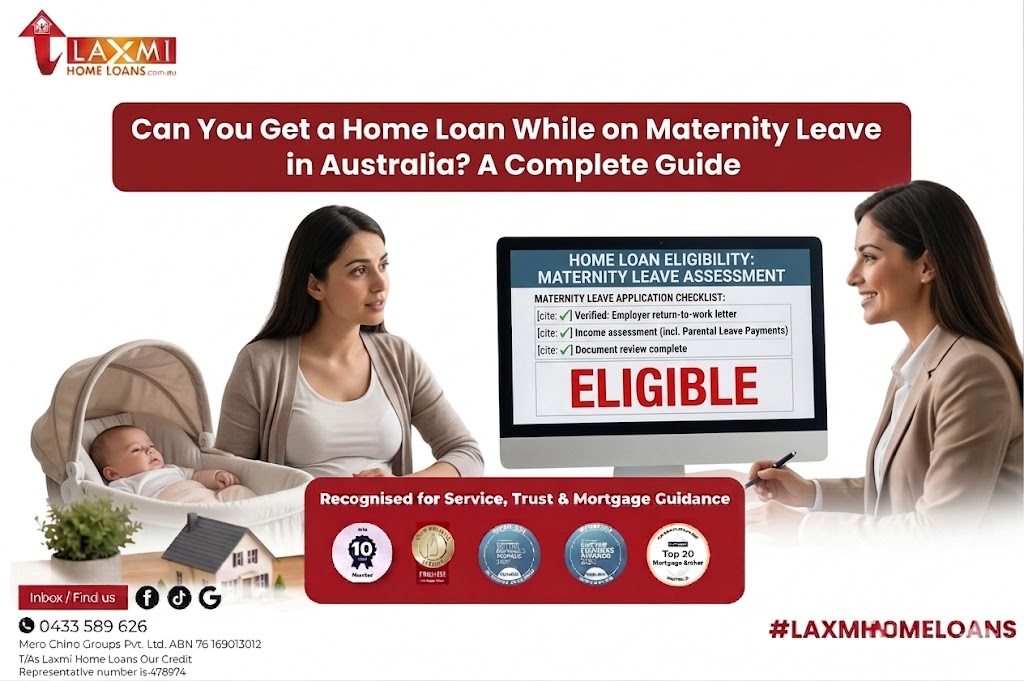
Home Loan on Maternity Leave Australia: What You Need to Know
You can get approved while on parental leave. Here is exactly how lenders assess your application and what you need to prepare.
- Can You Apply on Maternity Leave?
- How Lenders Assess Your Income
- Government Parental Leave Pay
- Documents You Will Need
- Two Application Strategies
- Red Flags to Avoid
- The Case for a Larger Deposit
- First Home Buyer Schemes on Leave
- Can Lenders Ask If You Are Pregnant?
- How a Mortgage Broker Helps
- Related Reading
- Frequently Asked Questions
Getting a home loan on maternity leave in Australia is possible. It happens regularly and lenders cannot legally refuse your application simply because you are pregnant or on parental leave.
What lenders will do is look very carefully at your income during leave, your return-to-work plans, your savings position, and your projected household expenses once your child arrives. The application is assessable and it just requires more preparation than a standard application.
Under the Sex Discrimination Act, Australian lenders are prohibited from denying a home loan application or offering less favourable terms solely because an applicant is pregnant or on parental leave. Your legal right to apply exists. The question is how to make the application as strong as possible.
Can You Apply for a Home Loan on Maternity Leave?
Yes. The legal protection is clear. What varies is how straightforward the approval process is, and that depends heavily on your income structure, savings position, partner’s income, and whether you have a confirmed return-to-work date.
Lenders are not concerned about your leave status in isolation. They are concerned about whether you can service the loan across the full loan term, starting from now. A well-prepared application that addresses the income gap, confirms your return-to-work plans, and demonstrates a savings buffer can absolutely succeed.
The key is understanding what lenders are looking for and preparing your documents accordingly before you apply.
How Lenders Assess Your Income During Leave
Lenders do not simply look at what you are earning right now during your leave period. They take a longer view, focused on your sustainable income over time.
Pre-Leave Salary
Most lenders base their income assessment on your regular full-time salary from before your leave commenced. This is the figure they use to calculate your borrowing power, provided you have a confirmed return-to-work date and a letter from your employer supporting it.
This is a significant point. Even though you are currently earning less, a lender can still assess you on your pre-leave income, but only if the documentation supports it. Without a return-to-work letter, the lender has no basis for using your full salary and will restrict their assessment to your actual current income, which is much lower.
Employer-Paid Parental Leave
If your employer offers paid parental leave, that income is generally assessable during the leave period. The amount and duration varies by employer. Lenders will want to see documentation confirming how long your employer parental leave runs and the payment amount.
The Savings Buffer Requirement
If your paid leave, whether employer or government funded, ends before your return-to-work date, there will be a gap during which you receive no income. Lenders will want to see that you have enough savings to cover your mortgage repayments for the entire duration of that unpaid gap.
For example, if your net salary is $5,000 per month and you plan to remain on unpaid leave for another 4 months, the lender may want to see at least $20,000 in savings available after accounting for your deposit, stamp duty, and other purchase costs.
The exact amount required will vary between lenders and will depend on your individual circumstances.
This savings buffer is not optional. If the gap cannot be funded from existing savings, it becomes a barrier to approval. Planning your savings position well before you apply is therefore essential.
Government Parental Leave Pay
From 1 July 2026, the Government Parental Leave Pay scheme provides eligible parents with up to 26 weeks of government-funded paid leave. This expanded scheme is a meaningful support during the leave period and most lenders will factor this payment into their income assessment.
However, lender policies on government parental leave pay vary. Some treat it as fully assessable income during the leave period. Others apply it only as a supplement and still restrict the overall income assessment. A mortgage broker can identify which lenders take the most favourable approach for your situation and income structure.
Documents You Will Need
A maternity leave home loan application requires all the standard documents plus three additional items that are specific to your leave situation.
Standard Documents
- Proof of identity, driver licence and passport
- Bank statements covering the past three to six months
- Evidence of genuine savings
- Most recent tax return and Notice of Assessment
- Details of all existing debts and liabilities
Maternity Leave Specific Documents
- Return-to-work letter from your employer confirming your exact return date, whether full-time or part-time, and your guaranteed salary on return
- Your final three consecutive payslips from immediately before your leave commenced
- Updated expense breakdown including projected childcare costs and any new healthcare expenses
- Evidence of employer parental leave payments if applicable
- Savings statements demonstrating your buffer for any unpaid leave period
The Return-to-Work Letter
The return-to-work letter is the single most important document in a maternity leave application. It is what allows the lender to use your pre-leave salary in their assessment rather than your current reduced income.
The letter must come from your employer’s HR department on company letterhead. It must state your confirmed return date, whether you are returning full-time or part-time, and your guaranteed salary. A vague or informal communication is not sufficient. If your employer is reluctant to provide this, speak with your HR team about the standard format lenders require.
25 July 2023
To Whom It May Concern,
This letter is to confirm the employment details of the staff member named below, who is currently on maternity leave and has confirmed a return to work date.
| Employee Name | Mrs [Full Name] |
| Position | Part-Time Permanent Office Manager, 30 hours per week |
| Employment Start Date | 24 June 2019 |
| Employment Type | Permanent Part-Time |
| Annual Income | $51,750 |
| Hourly Rate | To be confirmed by employer |
| Pay Frequency | Fortnightly |
| Work Location | Melbourne VIC |
| Maternity Leave Commenced | 27 April 2023 |
| Expected Return Date | 17 November 2023 |
| Role on Return | Part-Time Permanent Office Manager, 30 hours per week |
| Annual Income on Return | $51,750 (unchanged) |
The employee named above will resume her previous role on the confirmed return date. Her position, hours, and annual income remain unchanged from her pre-leave arrangements.
Should you require any further confirmation or documentation, please do not hesitate to contact us.
Yours sincerely,
Kishor Acharya
HR Manager
Laxmi Home Loans
Merrylands NSW
Note: This is a sample letter only. Replace all bracketed fields with the correct employee details before issuing to a lender.
Two Application Strategies
Depending on your overall financial position, there are two main approaches brokers recommend for maternity leave applicants.
| Strategy | When to Use It | Key Advantage |
|---|---|---|
| Apply jointly with a partner | Your partner has steady, continuous full-time income and good credit history | Combining incomes increases borrowing power significantly and reduces the lender’s perceived risk. Your maternity leave income is no longer the primary income being assessed. |
| Increase your deposit to 20 per cent | Applying as a single borrower, or where existing debts reduce borrowing capacity | A 20 per cent deposit removes LMI, lowers the loan amount, and makes the application more attractive to conservative credit assessors. It also signals strong savings discipline. |
These strategies are not mutually exclusive. A joint application with a 20 per cent deposit is the strongest possible position for a maternity leave applicant.
Red Flags That Can Hurt Your Application
Watch Out For These
- A return-to-work letter that states part-time rather than full-time return. Lenders will calculate borrowing power on the lower part-time salary, not your pre-leave full-time wage.
- A debt-to-income ratio above six times your household income. During leave, your reduced income can push this ratio above lender thresholds even if it was fine on your full salary.
- No savings buffer for the unpaid gap between the end of paid leave and your return date. This is a common reason for declined applications.
- Undisclosed childcare costs or underestimated living expenses. Lenders use benchmarks and will adjust declared expenses upward if they appear unrealistically low.
- Applying to the wrong lender. Policies on maternity leave income vary significantly. Applying to a lender with a restrictive policy wastes time and creates a credit enquiry on your file.
The Case for a Larger Deposit
A 20 per cent deposit removes the requirement for Lenders Mortgage Insurance. For maternity leave applicants, this matters for two reasons. First, it reduces the total loan amount, which reduces the serviceability pressure on a temporarily reduced income. Second, LMI providers sometimes apply additional scrutiny to applications where the borrower is on leave, and removing the LMI requirement removes that layer entirely.
If you are short of the 20 per cent threshold, read our guide on whether you need a 20 per cent deposit and our breakdown of what counts as genuine savings for lender purposes.
Understanding the difference between LMI and loan protection insurance is also worthwhile at this stage. Read our guide on LMI vs loan protection to understand what each covers and whether you need both.
First Home Buyer Schemes While on Maternity Leave
If you are a first home buyer, being on maternity leave does not automatically exclude you from government schemes such as the First Home Guarantee. Eligibility is based on income thresholds and property price caps, not employment status.
However, your income during leave will be assessed against the scheme’s income threshold. If your current parental leave income falls within the threshold, you may qualify. Your full pre-leave salary may also be considered depending on the lender’s policy and whether you have confirmed your return to work.
Read our complete guide on government schemes for first home buyers to understand which schemes you may be eligible for and how to apply.
You can also check the deposit required by city to understand how much you need to save based on where you plan to buy.
Can Lenders Ask If You Are Pregnant?
Many borrowers on maternity leave or planning a family have legitimate concerns about what lenders are allowed to ask. Knowing your rights before you walk into that conversation makes the process less stressful and more transparent.
What Lenders Cannot Ask
Under the Sex Discrimination Act, lenders are prohibited from directly asking whether you are currently pregnant or whether you intend to take parental leave. Those questions are considered discriminatory. A lender also cannot refuse your application or offer you less favourable loan terms on the basis of pregnancy or the potential for future pregnancy.
These protections are enforced by the Australian Human Rights Commission. For more information on your rights under sex and gender discrimination law, visit the Australian Human Rights Commission.
What Lenders Are Allowed to Ask
Lenders may ask about any anticipated changes to your financial or personal circumstances in the foreseeable future. This is not a personal intrusion. It is part of their responsible lending obligations under the National Consumer Credit Protection Act. Lenders must reasonably assess whether you have the capacity to service the loan over its full term.
Examples of questions a lender may ask include whether you expect any significant changes to your income or employment in the next 12 to 24 months, or whether there are any planned life events that could affect your ability to meet repayment obligations.
These questions are designed to ensure the loan is sustainable for you. Answering them honestly and factually, focused on the verifiable financial impact, is both your right and your responsibility.
Practical Advice
Answer questions about future circumstances honestly and focus on concrete, documentable impacts to your income and expenses. If you are planning a family, discuss your current financial position with a licensed mortgage broker before applying. A broker can help structure your application appropriately and identify lenders whose policies suit your situation.
Prepare supporting documentation that demonstrates your repayment capacity. Stable employment records, conservative budgeting, and a clear savings history all contribute to a strong application. Transparency throughout the process is the most effective way to secure appropriate finance while protecting your legal rights.
You are never required to disclose a pregnancy to a lender. You are required to disclose any anticipated changes to your income or expenses. Focus your answers on financial facts, not personal circumstances.
How a Mortgage Broker Helps Maternity Leave Applicants
Lender policies on maternity leave income vary more than in almost any other area of home lending. What one lender declines, another may approve based on exactly the same financial position. The difference is in how each lender treats parental leave pay, return-to-work letters, and savings buffers.
A mortgage broker knows those policies across a broad panel of lenders. They can identify which lender is most likely to approve your application before a single application is lodged. This protects your credit file from unnecessary enquiries, which is particularly important during a period when your income may already be subject to extra scrutiny.
A broker also helps you prepare the right documents before you apply. A return-to-work letter that is missing a key detail, or a savings statement that does not clearly demonstrate the buffer required, can cause delays or rejections that could have been avoided.
To understand what questions to ask before your first broker appointment, read our guide on what to ask your mortgage broker. And if you are weighing up whether to use a broker or go directly to a bank, read our comparison of broker vs bank for your home loan.
You should also understand why banks reject home loan applications so you can address any potential issues before they become a problem.
Ready to Discuss?
If you are on maternity or parental leave and want to understand your home loan options, talk to our team. We work with applicants across Australia in English, Nepali, and Hindi.
Book a Free Call Call 0433 589 626Frequently Asked Questions
Ready to Discuss?
Talk to our team about your maternity leave home loan options. We work with applicants across Australia in English, Nepali, and Hindi.
Book a Free Call Call 0433 589 626
Free Borrowing Power Calculator
Check Your Borrowing Power
Buying your first home, refinancing, investing or building?
Use our free calculators to estimate your borrowing capacity, repayments and upfront costs.
★★★★★ Trusted by hundreds of Australian home buyers
This will NOT trigger your credit check or impact your credit score. This is just for your reference purpose only.