
How to Get a Home Loan as an NDIS Disability Support Worker in Australia
Your loadings, overtime and salary sacrifice may be worth far more than you think. Here is what the right lender can do for you.
Many NDIS disability support workers believe they cannot qualify for a home loan, or that their borrowing power is too low to buy the home they want. This is often not true.
The reality is that lender policies vary greatly. One lender may assess only your base salary. Another specialist lender may assess 100% of your loadings, allowances, overtime and salary sacrifice. The difference in your maximum borrowing capacity can run into the hundreds of thousands of dollars.
This guide explains how the assessment works, what documents you need and how Laxmi Home Loans has helped hundreds of support workers across Australia find the right loan for their situation.
Laxmi Home Loans has settled hundreds of home loans for disability support workers across Australia. Book a free call and we will assess your full income picture.
Book a Free Call Call 0433 589 626Key Highlight: Maximising Borrowing Power Through Comprehensive Income Assessment
You may be surprised to learn that certain specialist lenders assess 100% of loadings, allowances and overtime as part of your income. Even salary sacrifice arrangements are often treated as tax-free income, which can significantly increase your assessable earnings for lending purposes.
Real-world example: Consider a couple both working on 25-hour contracts. Each earns a base income of $50,000 per year. Additional loadings, overtime and allowances contribute approximately $45,000 per person. Both also use $10,000 in annual salary sacrifice.
The results below show the difference between a standard lender and a specialist lender assessing the same couple at 80% LVR with no other liabilities or dependents.
Standard Lender Assessment
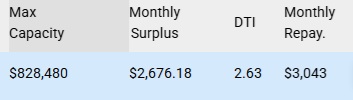
Base salary plus overtime counted. Salary sacrifice treated as a deduction. Loadings and allowances may be reduced or excluded depending on policy.
Specialist Lender Assessment
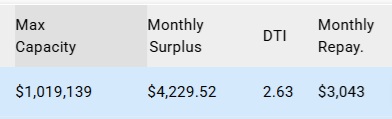
100% of loadings, allowances, overtime and salary sacrifice included where policy allows and the income is supported by documents.
This gap is not unusual. It reflects how much lender policy varies when assessing complex income types common in the NDIS sector. Using the right lender for your situation is one of the most important decisions you will make in the home buying process.
Disclaimer: The above servicing calculations were performed in June 2026 at 80% LVR with no other liabilities or dependents. Individual results will vary based on personal circumstances, lender policies and market conditions.
Understanding Your Employment Type as an NDIS Support Worker
Lenders assess your application based on how your income is structured. Knowing your employment category helps your broker package the application correctly from the start.
PAYG Employees
PAYG workers are employed by a registered NDIS provider or agency. Income arrives via regular salary payments with tax withheld by the employer. This structure generally aligns with standard full-documentation lending and may include full recognition of loadings and allowances when the right lender is chosen.
Sole Traders and ABN Contractors
Independent contractors operate under an Australian Business Number and manage their own tax obligations. Variable income and shorter trading history can require a specialist low-documentation assessment. Most lenders want at least six to twelve months of active trading history, though some flexibility exists for shorter periods supported by strong bank statement evidence.
How Lenders Assess NDIS Disability Support Worker Income
The table below illustrates what different lenders may or may not include when calculating your assessable income.
What specialist lenders may count:
- Base salary
- Weekend and public holiday penalty rates, including 100% of loadings where policy allows
- Regular overtime, including 100% where consistently received
- Allowances including travel, uniform and tool allowances
- Salary sacrifice as effective tax-free income, restoring it to your gross assessable income
What standard lenders may exclude or reduce:
- Overtime, with some lenders capping it at 80% or excluding it entirely
- Salary sacrifice, if treated as a reduction to taxable income
- Casual or irregular allowances
To understand how banks calculate your borrowing power in detail, read our guide on how banks calculate borrowing power.
Choosing the Right Loan for Your Situation
Home Loans
Whether you are buying your first home or investing, the right home loan structure will depend on your income type, deposit size and goals. NDIS workers often benefit from offset accounts, which reduce the interest you pay over time while keeping your savings accessible. Learn more about the difference between offset accounts and redraw facilities before deciding on your loan structure.
Pre-Approval
Getting a pre-approval before you start looking at properties gives you a clear budget and shows sellers you are a serious buyer. Laxmi Home Loans can assess your full income picture and help you get pre-approved with the right lender for your income type.
First Home Buyer Schemes
NDIS support workers buying their first home may be eligible for the First Home Guarantee, which allows eligible buyers to purchase with as little as a 5% deposit and no lenders mortgage insurance. See our guide to government schemes for first home buyers in Australia for current eligibility details.
From casual workers to senior coordinators, we know how to present your income correctly to the right lender. Let us do the same for you.
Book a Free Call Call 0433 589 626Required Documents for Your Home Loan Application
Preparation is the fastest way to a smooth approval. The documents you need depend on your employment type.
For PAYG Employees
-
1
Two to three recent consecutive payslips showing your base salary, loadings and allowances.
-
2
Three months of bank statements showing consistent salary deposits and your regular spending pattern.
-
3
Your most recent PAYG payment summary or ATO income statement confirming your annual earnings.
-
4
If you use salary sacrifice, a letter from your employer confirming the arrangement and the pre-tax amount.
For Sole Traders and ABN Contractors
-
1
Proof of active ABN registration, typically showing at least six to twelve months of trading history.
-
2
Six months of personal or business bank statements clearly showing NDIS-related payment inflows.
-
3
Most recent individual tax return and ATO notice of assessment where available.
-
4
Business activity statements if applicable, covering recent quarters.
To understand what lenders look for when assessing how long you need to be employed before you qualify, read our article on how long you need to be employed for a home loan.
How to Strengthen Your Application Before You Apply
These practical steps can improve your approval chances and help you secure a more competitive interest rate.
- Review your credit file. Obtain a copy of your credit report and address any errors or outstanding defaults before you apply.
- Reduce unnecessary spending. Lenders examine your living expenses. Reducing discretionary spending in the three months before applying demonstrates financial discipline.
- Consolidate or close unused credit cards. Each credit card limit reduces your borrowing capacity, even if you do not use the card. Learn more about how to boost your borrowing power.
- Show genuine savings. Most lenders want to see consistent savings over time. Read our guide on genuine savings requirements for home loans to understand what counts.
- Keep separate records. If you work across multiple NDIS platforms or shift patterns, keep clear records of all income sources and deposits. This makes it easier for a broker to present your application accurately.
Why Use a Mortgage Broker Instead of Going Directly to a Bank?
NDIS disability support workers often have income structures that banks assess poorly when approached directly. A specialist mortgage broker has access to a wide panel of lenders and knows which ones treat NDIS income most favourably.
Laxmi Home Loans has settled hundreds of home loans for disability support workers across Australia, including workers in Sydney, Melbourne, Brisbane, Perth, Adelaide, Canberra, Darwin and regional areas. We speak English, Nepali and Hindi and serve clients from all backgrounds nationwide.
As of June 2026, approximately 81% of home loans in Australia are written through mortgage brokers. There is a reason for that. Read our comparison of using a broker versus going to a bank to understand the difference in outcomes.
We are proud to help NDIS workers every day. If you are ready to find out what you can borrow, we are very eager to assist you.
Real Clients. Real Results.
Casual Support Worker in Western Sydney Purchases First Home
A casual NDIS support worker with variable shift patterns had been told by her bank that she did not qualify. Laxmi Home Loans identified a specialist lender that assessed 100% of her loadings and used a 12-month average income calculation. She settled on her first home with a 10% deposit and no lenders mortgage insurance through an eligible scheme.
Support Worker Couple Upgrades to a Larger Family Home
A couple both working in the disability support sector used salary sacrifice through their employer. Their bank offered a maximum loan of $730,000. After a full income review by Laxmi Home Loans, a specialist lender approved a loan exceeding $1,000,000, allowing the family to purchase the home they actually needed in their preferred suburb.
ABN Contractor Purchases Investment Property in Queensland
An independent NDIS contractor with 14 months of trading history was told he needed two years of tax returns before any lender would consider him. Laxmi Home Loans found a lender that accepted six months of business bank statements as the primary income evidence. He settled his investment property on time without delays.
Frequently Asked Questions
Can NDIS disability support workers get a home loan in Australia?
Yes. NDIS disability support workers can access home loans. The key is finding the right lender for your income type. Some specialist lenders assess 100% of loadings, allowances, overtime and salary sacrifice, which can significantly increase your maximum borrowing capacity compared to a standard bank.
Do lenders count NDIS loadings and overtime as income?
Some lenders assess 100% of loadings, allowances and overtime. Others only count base salary or apply reductions. Using the right lender for your income structure can make a difference of tens of thousands of dollars in what you can borrow.
Does salary sacrifice reduce my borrowing power?
Not with the right lender. Some specialist lenders treat salary sacrifice as tax-free income and restore it to your gross assessable income calculation. This can increase your maximum loan amount rather than reduce it.
Can casual NDIS support workers get a home loan?
Yes. Specialist lenders assess casual income based on your bank statement history and average earnings over time rather than requiring full-time permanent employment. Consistent deposits over twelve months are a strong indicator for these lenders.
What documents do NDIS support workers need for a home loan?
PAYG workers typically need two to three recent payslips, three months of bank statements and a PAYG payment summary or ATO income statement. Self-employed contractors may also need six months of business bank statements, recent tax returns and BAS statements where applicable.
What government schemes are available for NDIS workers buying their first home?
NDIS support workers may be eligible for the First Home Guarantee, which allows eligible buyers to purchase with a 5% deposit and no lenders mortgage insurance. Eligibility criteria and income caps apply. See our government schemes guide for current details and conditions.
How much can I borrow as an NDIS support worker?
Borrowing capacity depends on your income structure, deposit size, liabilities and the lender’s assessment policy. As our real-world example shows, two lenders assessing the same income can produce results more than $190,000 apart. The best way to find out is to have an experienced broker assess your full picture.
Why should I use a mortgage broker rather than going to my bank?
Banks can only offer their own products. A mortgage broker has access to a panel of 50 or more lenders and knows which ones assess NDIS income most favourably. For disability support workers with loadings, overtime or salary sacrifice, this can mean the difference between approval and rejection, or between a significantly higher or lower loan amount.
Laxmi Home Loans is very eager to assist NDIS disability support workers across Australia. We have done it hundreds of times. Book a free call and let us assess your income properly.
Book a Free CallCall 0433 589 626General Information Disclaimer
This article is general in nature and does not take into account your personal financial circumstances, objectives or needs. It is not financial advice. All loan applications are subject to lender approval, credit assessment and eligibility criteria. Interest rates and lender policies are subject to change without notice. Servicing calculations shown were performed in June 2026 at 80% LVR with no other liabilities or dependents. Individual results will vary. You should seek independent financial and legal advice before making any borrowing decisions.
Mero Chino Groups Pty Ltd T/As Laxmi Home Loans, ABN 76 169 013 012, Credit Representative Number 476974, authorised under Australian Credit Licence Number 383640.

Free Borrowing Power Calculator
Check Your Borrowing Power
Buying your first home, refinancing, investing or building?
Use our free calculators to estimate your borrowing capacity, repayments and upfront costs.
★★★★★ Trusted by hundreds of Australian home buyers
This will NOT trigger your credit check or impact your credit score. This is just for your reference purpose only.